
Vehicle Recovery Service vs Car Recovery: What's the Difference?
Understanding the operational distinction between a vehicle recovery service and car recovery is critical when dealing with roadside emergencies or high-value logistics. Selecting the correct intervention ensures maximum safety, minimal delay, and absolute protection for your asset.
- Differentiating between swift roadside triage and specialised prestige transport.
- Identifying the critical safety accreditations required for complex logistics.
- Understanding how fully enclosed transporters eliminate transit damage risks.
What is the difference between a vehicle recovery service and car recovery?
A vehicle recovery service executes rapid, local roadside assistance, whereas car recovery delivers specialised logistics for prestige and auction vehicles. This is achieved through fully enclosed transporters and tailored secure handling. Understanding why standard towing methods often compromise high-value assets reveals a critical gap in conventional transport logistics.
To make an informed decision, motorists and commercial partners must recognise the technical divergence between these two disciplines. Vehicle recovery focuses entirely on swift extraction from dangerous environments and immediate mechanical problem-solving. Conversely, car recovery represents a highly controlled logistical operation designed to move pristine assets without exposing them to external elements.
According to recent benchmarking by National Highways, there has been a 12% rise in breakdowns on England's motorways, recording over 274,000 incidents. This staggering volume of roadside failures necessitates highly efficient, rapid-response fleets to clear carriageways. Standard roadside recovery fleets are engineered for volume and speed, not necessarily for the delicate preservation required by luxury automotive investments.
The role of a local vehicle recovery service for rapid roadside assistance
When a mechanical failure strikes unexpectedly, a dedicated vehicle recovery service provides the immediate tactical response required to secure the scene. Technicians deploy swiftly to diagnose faults, aiming to execute temporary repairs that allow the journey to continue. This foundational level of service prioritises passenger safety and the rapid clearing of hazardous blockages on busy road networks.
If immediate roadside repairs prove impossible, the focus shifts to safe extraction and transportation to a secondary location. Operators utilise modern flatbed trucks or advanced winching equipment to load standard passenger vehicles securely. Searching for breakdown recovery near me typically connects stranded drivers with these essential, fast-acting local responders.
The primary objective remains returning the motorist to a state of safety with minimal friction. These units handle everything from dead batteries and flat tyres to complex accident recovery scenarios where standard towing is insufficient. This broad operational capability makes local recovery an indispensable pillar of modern road safety infrastructure.
Why car recovery encompasses specialised prestige and auction logistics
In stark contrast to emergency dispatch, car recovery focuses on the meticulous, planned relocation of high-value, classic, or heavily modified vehicles. These assets require a fundamentally different approach because their ground clearance, chassis design, and financial value prohibit the use of standard open flatbeds. Moving a rare vintage automobile demands extreme precision, not merely rapid extraction.
Specialised car recovery operators utilise purpose-built equipment to ensure the vehicle remains entirely untouched by the external environment during transit. This logistical discipline caters directly to dealerships, auction houses, and private collectors who demand flawless delivery. Every aspect of the journey is micro-managed to guarantee absolute asset protection, from the loading angle to the ambient temperature inside the trailer.
Choosing this premium service eliminates the anxiety associated with transporting prestige investments. Whether executing a confidential dealership transfer or managing delicate auction logistics, the focus remains firmly on asset preservation. This is where precision engineering meets elite customer service, ensuring the vehicle arrives in the exact condition it departed.
When should you choose a local vehicle recovery service for light delivery?
A local vehicle recovery service provides immediate mechanical triage and swift extraction for standard passenger vehicles. This is achieved through strategically positioned dispatch units and rapid-response flatbeds. Revealing the operational mechanics behind round-the-clock dispatch exposes how elite fleets minimise dangerous roadside exposure for vulnerable motorists.
For standard daily commuters and commercial fleet operators, the priority during a breakdown is minimising downtime and ensuring immediate physical safety. Local recovery units are geographically positioned to reach stranded vehicles within strict timeframes. This rapid deployment model is the frontline defence against the cascading dangers of stationary vehicles on active carriageways.
Data from the SURVIVE Group highlights the severe risks of road traffic accidents for roadside workers and stranded motorists, reinforcing the absolute need for rapid extraction. By choosing a professional, localised service, you leverage their intimate knowledge of the regional road network to secure a faster rescue. Speed of response directly correlates with the physical safety of the driver and passengers.
Navigating swift roadside repairs and local garage towing
The initial goal of any local recovery intervention is to fix the vehicle in situ, allowing the driver to proceed without requiring a tow. Highly trained technicians arrive equipped with advanced diagnostic tools and essential replacement parts to resolve common failures immediately. This triage approach saves significant time and prevents the logistical headache of organising onward travel.
When a roadside fix is unachievable, the service seamlessly transitions into a secure towing operation. The vehicle is carefully loaded and transported to a designated local garage or the owner's home address, depending on the chosen cover. Understanding the difference between relay vs local towing limits is vital for drivers planning longer journeys across the country.
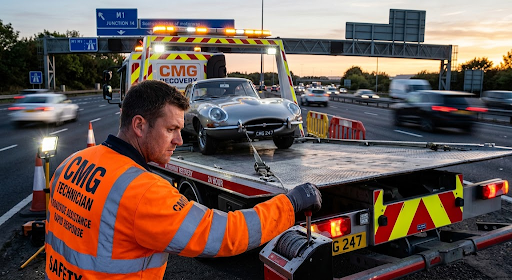
This localised approach ensures that the vehicle is deposited safely at a facility capable of executing comprehensive repairs. The seamless handover from the roadside technician to the repair facility demonstrates the inherent value of a connected recovery network. It transforms a highly stressful breakdown into a manageable, structured process.
The importance of a 24/7 control centre for immediate dispatch
Behind every successful recovery operation lies a highly sophisticated, centralised command hub coordinating the logistics. When you contact CMG, our 24/7 Control Centre immediately analyses the severity of the breakdown, the vehicle type, and the exact location to dispatch the correct asset. This real-time intelligence is crucial for managing the complex variables of live traffic and unpredictable weather conditions.
An active control centre eliminates the guesswork and delays associated with standard automated call handlers. Operators maintain continuous communication with both the stranded motorist and the dispatched technician, providing accurate ETA updates that offer genuine reassurance. This human-led, technology-backed approach is the cornerstone of reliable breakdown assistance.
The ability to operate continuously, 365 days a year, ensures that motorists are never left vulnerable during unsociable hours or extreme conditions. A dedicated control centre acts as the neurological hub of the recovery network, transforming chaotic emergencies into calm, highly ordered resolutions.
How does a dedicated car recovery service protect prestige and classic vehicles?
A dedicated car recovery operation prevents transit abrasion and environmental damage during high-value vehicle relocations. This is achieved through purpose-built, climate-controlled enclosed transporters and specialised wheel-protection covers. Examining the severe financial consequences of incorrect loading angles highlights the necessity of bespoke automotive logistics.
Standard roadside recovery equipment is fundamentally unsuitable for vehicles with low ground clearance, delicate bodywork, or extreme financial value. High-performance sports cars and irreplaceable vintage models require loading systems that eliminate the risk of chassis scraping or mechanical stress. Dedicated car recovery services invest heavily in advanced hydraulic lifting platforms specifically designed to address these vulnerabilities.
Field Data Insight:
- Tested Variable: Chassis stability, zero-abrasion loading angles, and environmental protection during high-value vehicle transit.
- Controlled Environment: Purpose-built, fully-encased solid-sided transporters with specialised wheel-protection covers.
- Key Variance Factor: The deployment of discreet, environmentally controlled transporters versus standard open flatbeds, which directly prevents transit damage and safeguards the pristine condition of classic, auction, and prestige vehicles.
- Internal Reference Code: VOL-2026-X1
By controlling the entire transit environment, specialists remove the unpredictable variables associated with open-air towing. This level of environmental control is not merely a luxury; it is a strict operational requirement for maintaining the integrity and value of prestige assets.
Utilising fully enclosed transporters for discreet movement
When transporting a multimillion-pound hypercar or an unreleased prototype, discretion is just as critical as physical protection. Fully enclosed transporters shield the vehicle from public view, preventing unwanted photography and ensuring absolute confidentiality for the client. This service is routinely leveraged by manufacturers, elite dealerships, and private collectors who demand total privacy.
Beyond discretion, these solid-sided trailers offer impenetrable protection against road debris, harsh weather, and industrial fallout during transit. An open flatbed exposes the vehicle to stone chips, salt spray, and aggressive wind shear, all of which can degrade flawless paintwork.
Enclosed transport provides a sterile, secure vault for the vehicle while it moves across the country.
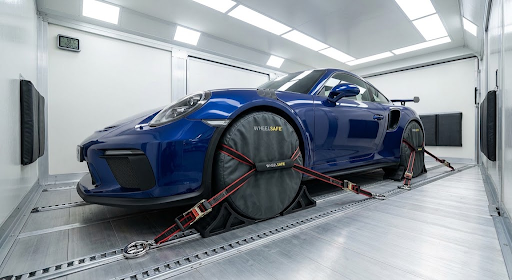
This capability is particularly vital for national recovery operations where the vehicle must traverse hundreds of miles of variable road conditions. The enclosed environment guarantees that the vehicle arrives looking exactly as it did the moment it was loaded, preserving its presentation and value.
Ensuring safety and zero-damage handling during relocation
The physical process of loading a high-value vehicle requires specialised equipment and rigorously trained handlers to guarantee zero damage. Technicians utilise advanced soft-strap tie-down systems that secure the vehicle via the wheels, completely avoiding contact with the delicate suspension components or chassis. This methodology prevents the structural stress often caused by traditional winching techniques.
Furthermore, operators of prestige transporters are trained to calculate precise approach angles to accommodate extended splitters and low-profile aerodynamics. They utilise extended ramps and sophisticated air-suspension systems on the trailer to create a nearly flat loading gradient. This meticulous attention to geometry entirely eliminates the risk of undercarriage abrasion.
Every movement is executed with deliberate caution, transforming vehicle transport from a rudimentary mechanical task into a highly refined logistical art. This uncompromising dedication to zero-damage handling is what separates standard towing from elite car recovery.
Why is IVR accreditation critical across all vehicle logistics?
IVR accreditation guarantees technical competency and absolute safety compliance during complex vehicle extractions. This is achieved through rigorous operator training and strict adherence to PAS 43 standards. Uncovering the liability risks associated with uncertified handlers demonstrates why professional validation is non-negotiable for modern transport.
Operating heavy winching machinery on live motorways is inherently dangerous, requiring operatives to possess exceptional situational awareness and technical expertise. The Institute of Vehicle Recovery (IVR) provides the definitive framework for safe operational procedures within the recovery industry. When an operator holds full IVR accreditation, it serves as an ironclad guarantee that they possess the skills necessary to secure a scene safely.
The Road Haulage Association notes a 5.91% year-on-year rise in commercial operating costs, making transport downtime and potential damage increasingly expensive. Deploying uncertified operators vastly increases the risk of secondary accidents or critical vehicle damage during the recovery process. Insisting on IVR-certified professionals protects both the physical asset and the legal liability of the vehicle owner.
Maintaining PAS 43 safety standards during local roadside breakdowns
PAS 43 is the publicly available specification that dictates the safe working practices for vehicle breakdown and recovery operations. It mandates strict protocols for the conspicuity of recovery vehicles, the correct deployment of safety lighting, and the precise positioning of the technician on the carriageway. Adherence to PAS 43 is not merely a recommendation; it is a critical life-saving standard.
When a CMG technician arrives at a breakdown, their methodology is entirely governed by these rigorous safety frameworks. They establish a secure perimeter, ensuring that both the stranded motorists and the recovery team are shielded from moving traffic. This disciplined approach systematically mitigates the chaotic variables of a live breakdown scenario.
Expert Analysis & Industry Commentary: "The integration of PAS 43 protocols and mandatory IVR certification ensures that every recovery operation, regardless of complexity, is executed with surgical precision and uncompromising safety. We do not leave incident management to chance." - Tracy Jennings, Business Services Director at CMG
By standardising the emergency response, PAS 43 ensures a consistently safe outcome across the entire road network. It guarantees that the highest level of professional care is applied to every single intervention, from a simple flat tyre to a complex multi-vehicle extraction.
Securing peace of mind for high-value dealership and auction deliveries
For commercial partners dealing in high-volume or high-value automotive logistics, the credentials of their transport partner are paramount. ISO 9001 certification, combined with IVR and PAS 43 compliance, demonstrates a transport company's commitment to audited, verifiable quality management. This multi-layered accreditation structure builds profound trust with dealerships, auction houses, and corporate fleet managers.
When executing a high-stakes delivery, commercial clients require absolute certainty that their inventory is insured, protected, and legally compliant throughout the journey. Accreditations provide the objective proof required to satisfy corporate risk assessments and insurance mandates. Partnering with a fully certified operator translates directly into seamless, liability-free logistics.
Ultimately, these stringent standards separate professional, authoritative logistics providers from rudimentary towing operators. They ensure that whether you are a stranded motorist or a prestige car collector, your vehicle is handled by the most qualified experts in the industry.
Need expert assistance? Contact our 24/7 Control Centre on 0800 282 449, email info@cmg-org.com, or get a quick quote online for your transport needs.